Partnership – cornerstone to achieving goals
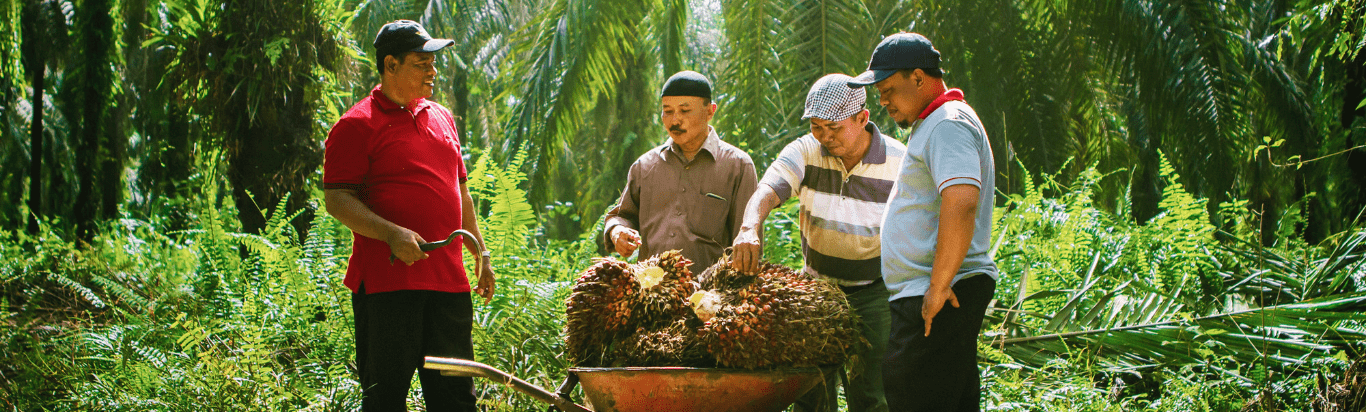
When palm oil is responsibly farmed, it is an effective way to create jobs and alleviate poverty, and provides opportunities for communities to secure better livelihoods. As one of the largest plantation companies in Indonesia, operating largely in rural and remote areas, Golden-Agri Resources (GAR) plays an active role in the well-being of our employees, and in the wider communities and landscapes where we operate.
However, finding the best way to operate sustainably often requires new, innovative solutions. GAR recognises that this is only possible through working collaboratively with relevant experts and key stakeholders.
GAR implements projects in the following areas:
Smallholder development
Health, labour, and welfare
The interactive map below shows our community outreach projects across Indonesia. Click on the icons for more information.

Belitung (2 Villages)
Project with 3 villages:
Vegetables, organic pepper,and fish crackers

Vegetables

Organic Pepper

Fish Crackers
Central Kalimantan
(15 Villages)
Projects with 15 villages:
Paddy rice, coffee, honey, vegetables, pigs, roselle syrup and freshwater fish in Sungai Rungau

Paddy Rice
Vegetables

Coffee

Honey

Freshwater Fish

Roselle Syrup

Pigs
Riau (15 Villages)
Enterprise projects with 15 villages:
Red ginger, freshwater fish, goat, Vegetables, banana & tempe, and paddy rice in Siak District

Ginger

Goat
Freshwater Fish
Vegetables

Banana & Tempe
Paddy Rice

Palm Sugar
Jambi
(3 Villages)
Projects with 3 villages:
Paddy rice, vegetables, medicinal plants & herbs
Paddy Rice
Vegetables

Medicinal
Plants & Herbs
West Kalimantan
(22 Villages)
Projects with 24 villages:
Paddy rice, Moringa, honey, vegetables freshwater fish, pigs, goat, eggs and chicken in Kapuas Hulu
Paddy Rice

Moringa
Vegetables
Honey
Freshwater Fish

Chicken
Goat

Eggs
Partnership projects
Strong partnerships between governments, the private sector, and civil society are required to achieve sustainable development. Many of our projects involve collaboration with partners. These partnerships allow GAR to harness the right expertise and resources to effectively execute, scale and sustain these projects. The partnership models are tailored to the needs of each project.
PT SMART Tbk together with our parent company, Golden Agri-Resources (GAR), L’Oréal, and the SouthPole Group are collaborating to rehabilitate and conserve over 2,000 hectares of degraded peatland in GAR’s subsidiary, PT Agro Lestari Mandiri (PT AMNL) in West Kalimantan.
The project covers hydrological management and ecological restoration of peatland within the surrounding villages. Along with rehabilitating over 2,000 hectares of peatland, 600 hectares are allocated for sustainable livelihood programmes for nine villages surrounding the concession. The livelihood programmes helps villagers grow their own and more varied food. Selling excess crops in local markets generates additional income. Read the full case study here.
Southpole
FIELD
Transitions
Alternative Livelihood
Rehabilitation
Fire Prevention

For many farmers in Jambi, Sumatra, peatland cultivation is a way of life—but it comes with serious side effects like flooding, high CO2 emissions, and declining soil quality.
That is why GAR, with support from a Philanthropy Asia Alliance (PAA) grant through Golden Philanthropies (GP), is leading a feasibility study to find better solutions. Over the next five years, we are looking at how over 2,000 hectares of peatland can be rehabilitated while creating sustainable income streams for communities there, including carbon-based revenue opportunities.
To ensure these changes are effective and long-lasting, we’re focusing on a holistic strategy compromising:
- Community education
- Community economic empowerment
- Fire risk mitigation
With experience in peatland rehabilitation since 2017 and long-standing community empowerment programmes, we are committed to finding solutions that can be scaled up across Indonesia.
Plan B
In Jambi, peatlands matter to both nature and the communities who live alongside them. Together with Nestlé and PepsiCo, we are continuing our peatland restoration work, building on lessons from West Kalimantan.
What we’re doing together:
- Rehabilitating and conserving 2,100 hectares of degraded peatlands at PT Primatama Kreasi Mas (PT PKM), a GAR subsidiary, through:
- Managing water levels carefully to keep peatlands wet and resilient
- Reducing fire risk through an integrated fire management system
- Supporting natural recovery through revegetation and assisted regeneration
- Working with communities
- Supporting sustainable livelihoods linked to healthy peatlands
- Building a shared understanding of how peat protects homes, farms, and the climate
Nestlé
PepsiCo
GAR aims to build rural resilience. We help villages ensure food security while preserving their environment. The Forest Village Conservation project in Gunung Mas and Seruyan Districts includes the development and improvement of organic farming and coffee cultivation.
We assist village heads with developing a conservation plan, which aims to tap ecosystem services from protected areas. Coka Coffee (a coffee buyer, processor and trader) was brought in to develop the SESAMA programme where farmers are trained on Sustainable Agricultural Practices (SAP) for coffee cultivation and taught to prepare land for cultivation without using fire.
To date, four villages (two villages in Gunung Mas District and two villages in Seruyan District) have received technical and financial assistance from GAR and our partner, Wageningen University (WUR) to develop more areas for organic farming and coffee.
GAR, ADM Cares, and Tzu Chi Foundation are partnering on two projects to empower rural communities in Riau Province, Indonesia. The first project will improve childcare facilities (Balai Penitipan Anak/BPA) for women in rural communities. The second project will establish community learning centres (CLC) which serve as hubs for learning and community engagement. Both projects aim to improve income and food security for these communities.
The BPA project aims to improve 35 existing childcare centres, train 60 caregivers, and upgrade the facilities. The longer-term goal is to open the childcare centres to the broader community, not just GAR employees.
The CLC project in Riau will focus on developing a pilot model for integrated ecological farming, the production of commercial organic fertilisers and horticultural crops, as well as integrated cattle management. The project will identify suitable locations for the centres, form twelve community groups, provide training on sustainable agriculture, and promote local products developed by the community enterprises.
Press release: ADM Joins GAR and Tzu Chi Indonesia to Accelerate Progress in Indonesia’s Rural Economies
ADM Cares
Tzu Chi Foundation
Visa partnered with GAR to pilot “Ibu Berbagi Bijak”, a financial literacy and business skills training programme for women in rural areas. This initiative is part of GAR’s ongoing programme to upgrade and maintain over 300 childcare facilities (Balai Penitipan Anak or BPA) in and around operational areas.
Research confirms the deep impact of accessible childcare for women. It not only removes a major barrier and empowers women to participate in the workforce, but also provides critical developmental benefits like proper nutrition for children.
Beyond immediate benefits, this initiative also upskills BPA caregivers and equips them with business management skills. The outcomes of this pilot will inform GAR and Visa’s efforts to introduce similar initiatives to other target groups in rural areas.
In 2014, GAR subsidiary, PT Kartika Prima Cipta (PT KPC), collaborated with the Dian Desa Foundation to help surrounding communities cultivate moringa plants, process, and market the end-products. By 2019, those communities planted more than 23,000 seedlings and are producing moringa products such as leaf powder, branch powder, seed powder, and seed skin powder to sell.
This is part of our Bright Future Initiative, which also includes piloting organic farming plots and other activities to expand and diversify income sources of communities.
Dian Desa Foundation
From 2025 to 2028, GAR is collaborating with IDH and Mondelēz International to promote sustainable palm oil production in Aceh and North Sumatra. This initiative is part of the Sustainable Palm Oil Landscape programme and includes our Sawit Terampil project. We work with local mills that supply to GAR. Together, we reach out to independent smallholders, helping them to strengthen farm governance, access sustainable certification support programmes such as RSPO, and adopt more sustainable practices.
The goal: support 10,000 smallholders across Langkat, North Aceh, Subulussalam, and Aceh Singkil. This project also aims to empower 2,000 women by strengthening their household economy.
We will share progress along the way and welcome further collaboration from partners and stakeholder interested in supporting certified farmer groups and advancing sustainable palm oil.
IDH
Mondelēz International
After a successful project in Langkat, North Sumatra, we are continuing our partnership with IDH Sustainable Trade Initiative to empower independent palm oil smallholders in Ketapang, West Kalimantan – one of Indonesia’s key palm oil regions.
This new initiative (2024-2025) is part of IDH’s Initiative for Sustainable Landscape (ISLA) programme in Indonesia, funded by the Dutch Ministry of Foreign Affairs. It focuses on two pillars:
• Helping farmers improve their skills through our Sawit Terampil programme
• Strengthening how the landscape is managed
By working with local mills that supply us, the project aims to reach at least 1,000 smallholders with training in Good Agricultural Practices and No Deforestation, No Peat, and No Exploitation (NDPE) principles. We want these improvements to benefit the farms directly, and create a positive ripple effect across the supply chain.
Through this partnership, we hope to build a more sustainable palm oil landscape in Ketapang – one that supports farmers’ livelihoods while protecting the environment.
Past Partnerships
GAR worked with Neste and SPKS to support independent smallholders in Siak, Riau. The project aimed to improve sustainable practices and secure Group Certification for the farmers for the supply of certified palm oil. Farmers received training and support to access wider markets, aligning with GAR’s and Neste’s sustainability goals.
Neste
SPKS
Learn more about Independent Smallholder Certification
Read how partnerships with customers transform the palm oil industry
Together with Nestlé and the Earthworm Foundation, we mapped smallholder estates and trained three villages in Participatory Land Use Mapping techniques to build capacity for the communities.
We also conducted training on the use of locally available materials to make organic fertiliser and best agricultural techniques to improve yields and soil health. Farmers were empowered to share their knowledge with other community members too.
We established a sample plot for horticulture projects to help promote livelihood diversification and food security. New crops include sweet corn, tomatoes, red beans, peanuts, onions, and rice.
Nestlé
Earthworm Foundation
From 2019 to 2023, this programme supported independent smallholders in Riau and Sumatra on their journey towards sustainable palm oil production. GAR provided training in sustainable agricultural practices to help farmers see the long-term value of adopting such methods.
Our technology partner, Koltiva, developed and rolled out digital platforms to improve traceability and transparency across the supply chain. Their field teams trained mill staff, agents, and farmers on using the system. This supported GAR and our partners in moving towards traceability to the plantation level.
By the end of 2021, the project had reached 1,505 out of 4,000 targeted smallholders, along with 45 agents and nine independent mills. In environmentally sensitive areas, the programme also included deforestation monitoring.
To learn about our initiative, you can read here.
Fuji Oil
Koltiva
This project, led by GAR in partnership with IDH, aimed to uplift independent smallholders in Langkat, North Sumatra, through better access to sustainable palm oil practices.
In its first year, the project worked with three mills to support surrounding smallholder producers. Key achievements included:
• Mapping over 3,000 hectares of smallholder plantations
• Training nearly 3,000 farmers in sustainable agricultural practices
• Forming multiple farmer groups to strengthen peer collaboration
As a result, over 500 smallholders were prepared to pursue RSPO or ISPO certification.
In 2024, GAR, IDH, and Mondelēz International expanded the initiative to train at least 300 more smallholders. The programme closed at the end of 2024, having improved practices in Langkat and built a stronger foundation for responsible palm oil production.
IDH
Mondelēz International
GAR, in collaboration with Nestlé, the Danish Institute of Human Rights ,and the Earthworm Foundation, conducted a labour assessment of four mills supplying one of GAR’s refineries, PT SMART Tbk Belawan.
The project assessed the current conditions and implementation of labour regulations within five Nestle-GAR suppliers located across Sumatra, Riau, and Kalimantan.
We mapped and identified independent farmers and their sources of alternative incomes, and we are now helping them look for partners to scale their farming.
Nestlé
Danish Institute of Human Rights
The Decent Rural Living Initiative (DRLI) launched in 2017. GAR, along with Wilmar, Sime Darby, Cargill, and Musim Mas, is exploring collaborative ways to address human rights and labour related issues within the palm oil industry in Indonesia.
Four potential areas for collaboration were identified:
- Developing a rights awareness platform, with a focus on occupational health and safety
- Increasing telecommunications connectivity in rural locations
- Spearheading a social dialogue process with unions and workers across South Sumatra in support of a Collective Bargaining Agreement
- Improving family well-being on concession lands
These collaborative solutions create impact in three ways:
- Sharing data within the group to implement solutions on a bigger scale and learning from good practices of participating growers.
- Providing tools to understand and measure long-term impact for existing projects.
- Each component serves to complement the others and collectively contribute to support to Decent Rural Living in a tangible and systemic way.
Supported by Nestle and Winrock International (Winrock), GAR is carrying out a range of activities aimed at enhancing suppliers’ compliance with human rights standards.
Partnering with the Accountability Framework Initiative (AFI), Verite Southeast Asia and the International Labour Organisation, we are raising awareness on human rights in palm oil for suppliers, empowering representatives from supplier companies as Occupational Health and Safety (OHS) experts and exploring how collective bargaining and social dialogues can be used to maintain harmonious workplaces and successful collaborations. An engaging toolkit in the form of an animation video was developed to facilitate this work.
Additionally, we joined forces with Verité Southeast Asia to assess labour and human rights in Nestlé’s supply chain. GAR also revised our supplier self-assessment form to better assist suppliers in meeting sustainability standards.
Nestlé
Winrock International
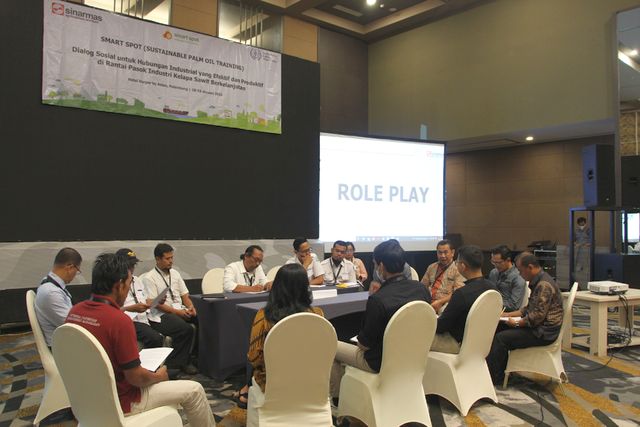
Since 2022, Golden Agri-Resources (GAR) has been working side by side with suppliers to strengthen respect for human rights across the palm oil supply chain, under our multi-year Supplier Transformation Programme.
The action-oriented programme focuses on three areas:
- Building capacity for Human Rights Agents – representative from our suppliers who join the programme and commit to act as champions of human rights in their own operations
- Providing tailored training for suppliers
- Recognising adoption of best practices through a reward programme
Collaboration is at the heart of this effort. We partner with organisations such as the:
- International Labour Organisation (ILO),
- National Commission on Human Rights (KOMNAS HAM),
- Dignity in Work for All (DIWA),
- KEM Indonesia,
- Sekawan Sinergi Lingkungan,
- Earthworm Foundation, and
- PT Trifos Internasional Sertifikas
We’re are grateful for the support from global companies. Nestlé via the Nestlé Human Rights Fund facilitated by Winrock, has supported us since 2022. In 2024, we signed an agreement with Neste, followed by L’Oréal in 2025. With more companies joining year by year, the momentum continues to build, reflecting a shared commitment to advancing human rights in palm oil supply chains.
Together, we are building an environment where respect for human rights becomes part of daily business practices.
These are just some of the projects where you can immediately help to positively impact lives with your contribution. If you would like to support any of the projects or co-sponsor projects, please email [email protected]

Memberships
AVPN
GAR is a member of AVPN, an ecosystem builder for the social investment sector. AVPN’s mission is to ensure that resources are deployed effectively to address key social challenges facing Asia today and in the future.
GAR is working with AVPN to explore impact investments and partnerships with the aim of scaling our current sustainability and CSR projects.

Food Industry Asia (FIA)
As an ingredient producer and food manufacturer, GAR is a part of FIA, a collective of leading food and beverage companies. It seeks to enhance the industry’s role as a trusted partner in the development of science-based policy in the region.

Global Agribusiness Alliance (GAA)
GAA is an international, private sector alliance committed to harnessing the collective strengths of the global agri-business sector to tackle environmental, social, and sustainability challenges to improve the resilience of farmers across the world.

PISAgro
PISAgro aims to promote public-private partnership as a cost-effective way of delivering multiple benefits for wider society in Indonesia. PISAgro has 10 working groups that include palm oil, horticulture, and soybeans. GAR is part of the PISAgro working groups to support agricultural output.

Tropical Forest Alliance (TFA)
GAR is an active member of the Tropical Forest Alliance (TFA), a global public-private partnership. Members take voluntary actions, individually and in combination, to reduce the tropical deforestation associated with the sourcing of commodities such as palm oil, soy, beef, and paper and pulp.

World Business Council for Sustainable Development (WBCSD)
GAR is a member of WBCSD and its network of over 200 leading sustainable businesses. As part of the Agriculture & Food Pathway, our aim is to lower greenhouse gas emissions from food production and protect natural environments. We are also part of the Equitable Livelihoods initiative, where we are putting the prosperity and well-being of farmers front and centre.
